
The European HPC ecosystem gathered in Dublin during the EuroHPC User Days
The EuroHPC Joint Undertaking (JU) User Days provided a great platform for decision-makers, service providers and users to discuss the latest achievements, trends, challenges and opportunities in the field.
Representatives from the JU provided a comprehensive overview about the types of calls for proposals through which they can access supercomputing—and now quantum computing—capacities within European infrastructures. In addition to explaining the processes, they shared practical tips to help potential users submit successful applications.
The event featured detailed presentations on the flagship of the EuroHPC infrastructure—Europe’s first exascale supercomputer, Germany’s JUPITER—as well as the French “Alice Recoque,” currently under construction and also targeting the exascale range.
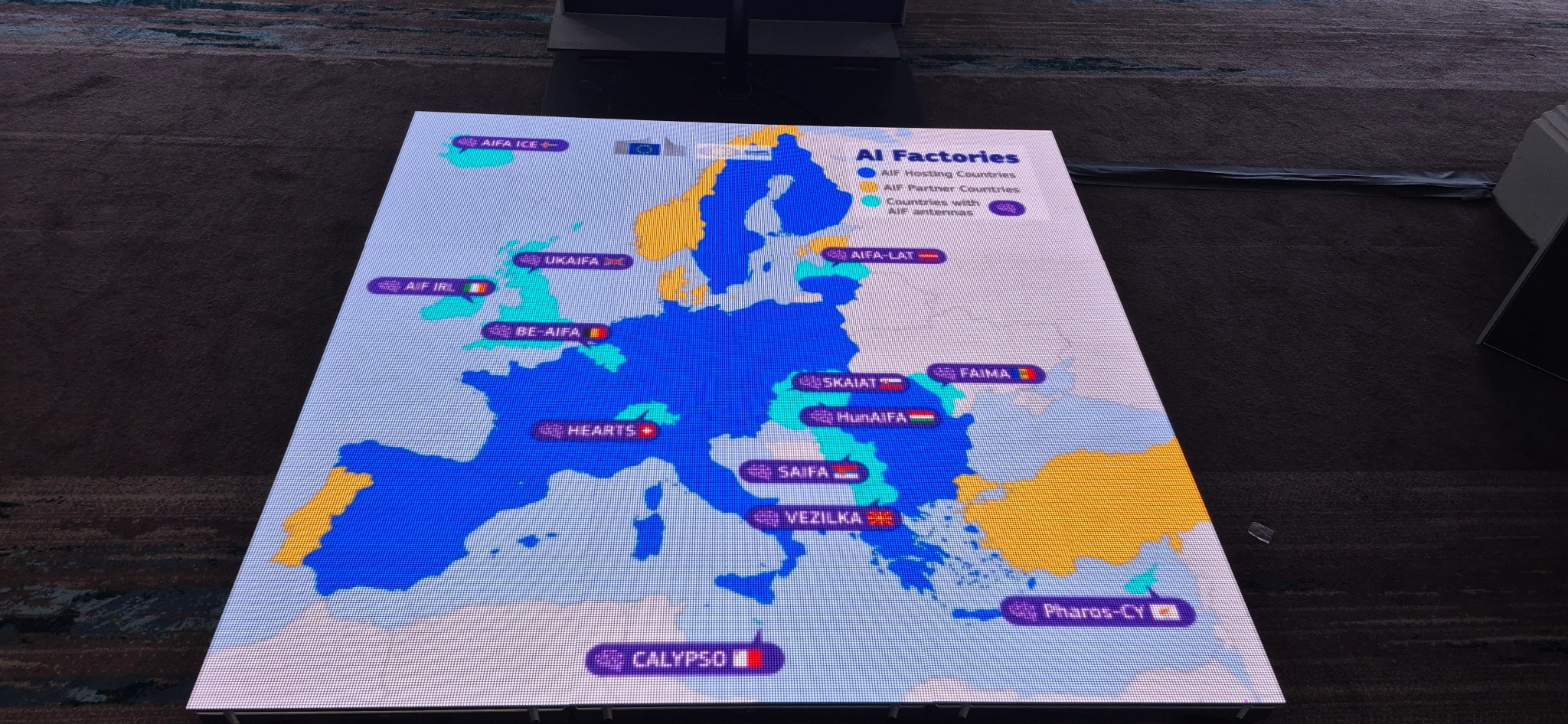
Following the plenary sessions, experienced users presented—in sessions organized by scientific discipline—how they had utilized the HPC (High Performance Computing) capacities provided by the EuroHPC infrastructure in their research. They paid particular attention to the AI Factory (AIF) and AI Factory Antenna (AIFA) initiatives; SZTAKI is involved in the latter, leading the Hungarian AI Factory Antenna project, HunAIFA. SZTAKI colleagues attended the conference to network and share knowledge, taking the opportunity to discuss potential collaborations with representatives of Antenna initiatives from other countries and to share their experiences to date.
In addition to the official program, they also held informal meetings. Members of the recently awarded CoopAIFA (Cooperation of AI Factories and Antennas) consortium gathered to discuss the steps required to launch the project. CoopAIFA is led by Finland’s CSC and involves a massive consortium of 56 partners; SZTAKI, representing HunAIFA, is included. The project aims to coordinate the operations of AI Factories and AIFAs across Europe.
On top of HPC, the field of quantum computing—which recently came under the remit of the JU—is playing an increasingly important role. The first calls for access to quantum computing capacities have already been issued.
The next User Days event will take place in Greece in 2027, where users are expected to report on the initial experiences and results gained from utilizing these capacities.